
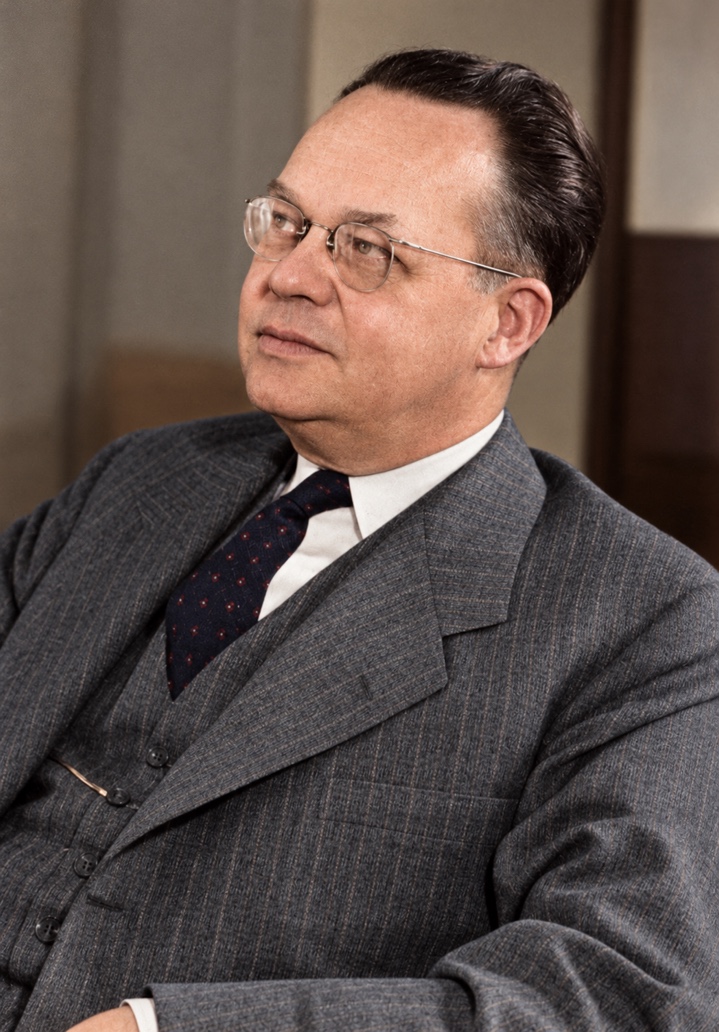
Carl P. Russell
1894–1967The young park naturalist who walked Yosemite's backcountry in 1923 and chose the ground the High Sierra Camps still stand on — and who returned, a quarter century later, as superintendent of the park.
If Stephen Mather supplied the High Sierra Camps' vision and Nic Fiore their hospitality, Carl Parcher Russell chose their ground. Naturalist, museum builder, historian, and eventually superintendent of Yosemite, he is the rare figure who picked the camps' sites as a young man and later governed the park that held them — and whose history of Yosemite is still the standard account of its first century.
A naturalist comes to Yosemite
Born in Fall River, Wisconsin on January 18, 1894, Russell studied biology at Ripon College and took a master's degree at the University of Michigan, served as an infantry lieutenant, and taught high school in Reno before finding his calling in the national parks. He joined Yosemite as a ranger naturalist in June 1923, and that September — at twenty-nine — became the park's naturalist, a post he held through 1929.
The 1923 survey: siting the High Sierra Camps
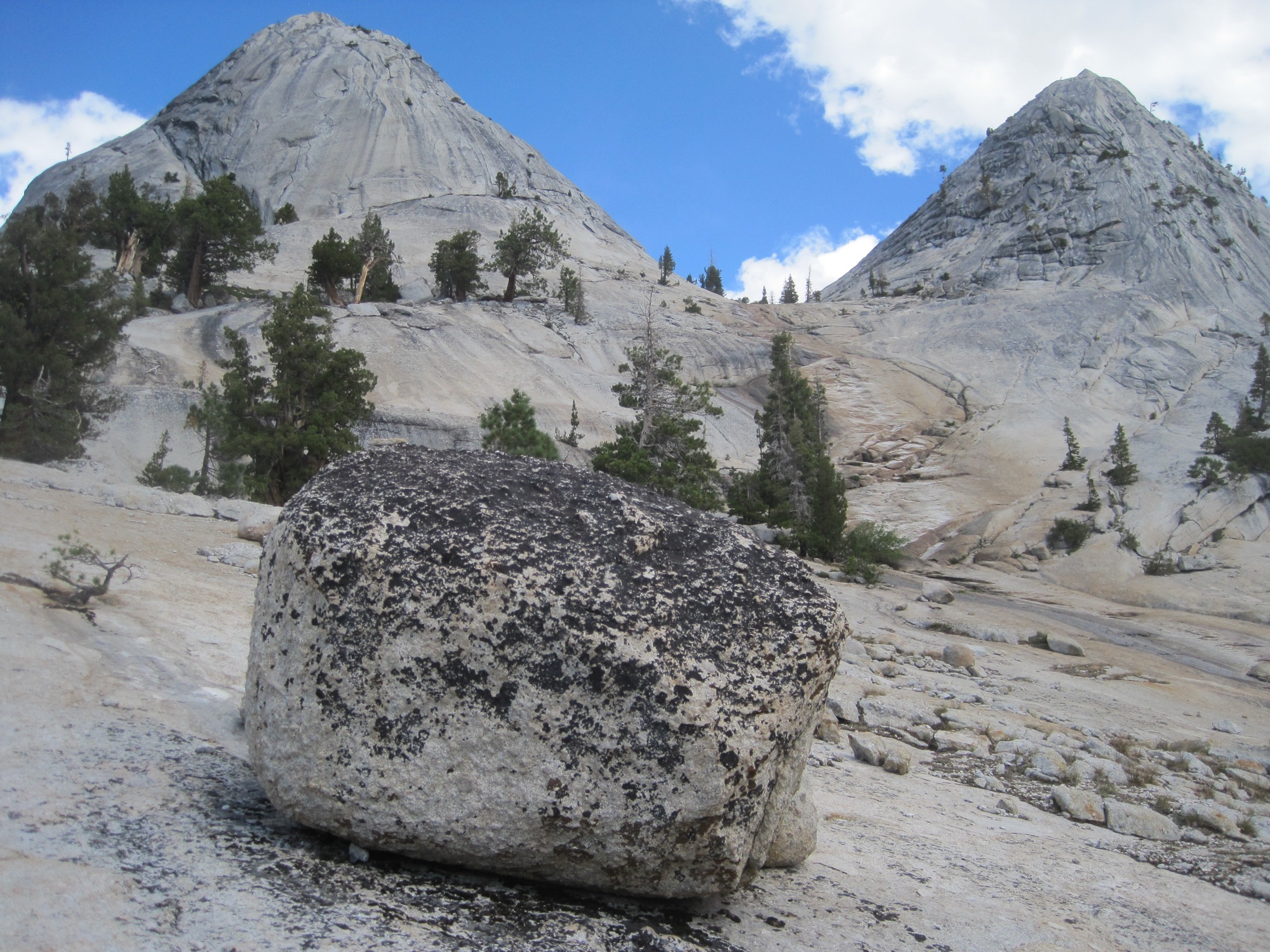
That same year, Yosemite's superintendent W. B. Lewis set out to revive Mather's idea of a chain of backcountry camps, and sent his new naturalist into the high country to find the places where they should stand. Russell's criteria were simple and have aged remarkably well: the beauty of the surroundings, the availability of water, and sites within a day's walk of each other. He selected Little Yosemite Valley, Merced Lake, Boothe Lake — the forerunner of Vogelsang — the Lyell Fork of the Tuolumne, Tuolumne Meadows, Glen Aulin, and Tenaya Lake.
Most of the camps were built the following season, and in 1925 the "Hikers' Camps" took the name they carry still: the High Sierra Camps. A century on, the camps that survive stand on ground Russell chose, spaced the way he spaced them — one day's walk apart.
The museum and the interpretive idea
Russell's other Yosemite monument is the Yosemite Museum: he directed its development, and when it opened in May 1926 it was among the first permanent museums anywhere in the National Park Service. He ran the park's pioneering nature-guide program, earned a Ph.D. in ecology from Michigan in 1931 while serving, and that same year published One Hundred Years in Yosemite — revised in 1947 and still the standard history of the park's first century.
Washington, and back as superintendent
The Park Service promoted him steadily out of the park and into the agency's intellectual leadership: chief of the Museum Division in 1935, then of the Wildlife Division, a regional directorship, and from 1939 to 1947 Chief Naturalist of the National Park Service. Then, on December 1, 1947, he came back to where he had started — as superintendent of Yosemite National Park, serving until late 1952, the naturalist of 1923 now responsible for the whole park.
Scholar of the frontier
A Guggenheim Fellowship in 1952 carried him into a second scholarly life, on the history of the fur-trade West; after retiring in 1957 with 34 years of service he published Guns on the Early Frontiers and the posthumous Firearms, Traps, and Tools of the Mountain Men, which made him a leading historian of the mountain-man era. He died on June 19, 1967, in Orinda, California. His papers fill seventy-seven boxes at Washington State University; among his last writings was an unpublished 1961 essay on the High Sierra Camps and their place in interpreting Yosemite — still thinking, at the end, about the camps he had sited nearly forty years before.